Why sugarcane decaf
Decaf has a reputation problem, and most of it is earned by the method. Here are the four ways caffeine gets out of a bean, what "sugarcane" really means, and why we picked it.
Every decaffeination method has the same job: dissolve the caffeine out of a green bean while leaving the sugars, acids and aromatic precursors behind. Caffeine is water-soluble, which is the easy part. So is most of what makes coffee taste like coffee, which is the hard part.
The four methods
Methylene chloride
The old industrial standard. Green beans are steamed, then washed in methylene chloride (dichloromethane), which binds caffeine very selectively. The solvent is steamed off and the beans dried. It's efficient and cheap, and it's why decaf got its reputation: the process is often run on low-grade coffee, and the result tastes like it. Residues are regulated at 10 parts per million in the US and typically test far below that, but it's still a chlorinated solvent, and a lot of people would rather not.
Swiss Water
No solvent. Green beans soak in a caffeine-saturated water extract; caffeine diffuses out into the water and gets stripped by activated carbon, round after round, until the beans are at 99.9% caffeine-free. It's a very good process, and the plant is in British Columbia. Which means Colombian coffee is shipped to Canada, processed, and shipped on to the roaster. Two sea legs and several weeks of green coffee sitting in transit before it's even roasted.
Supercritical CO2
Carbon dioxide under high pressure behaves like a liquid and pulls caffeine out very cleanly. The equipment is expensive and mostly used at large scale in Germany. Excellent results, but the same geography problem as Swiss Water, and a minimum lot size well above what a three-coffee brand needs.
Sugarcane, or ethyl acetate
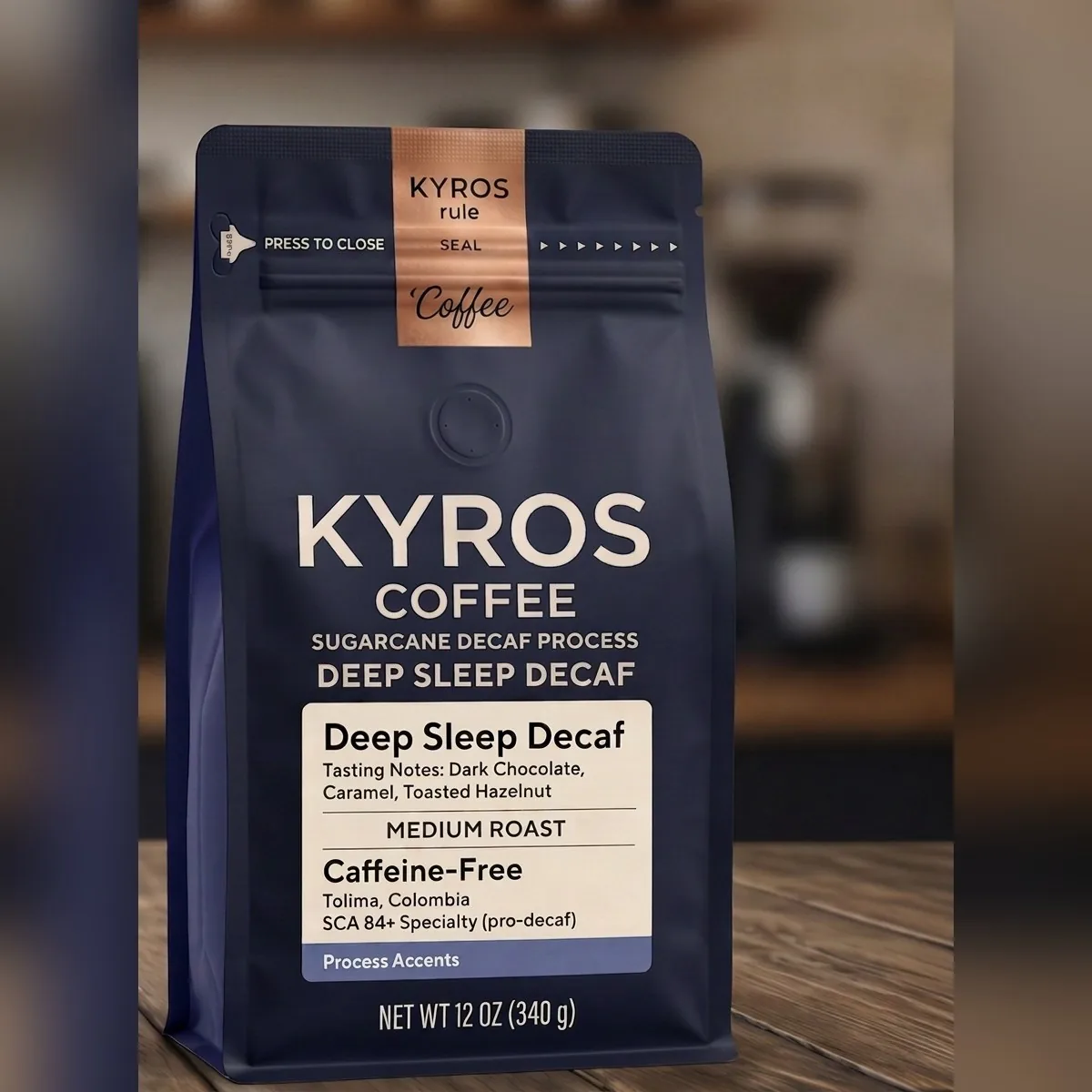
This is ours. Ethyl acetate (EA) is an ester that occurs naturally in ripe fruit and, in small amounts, in coffee itself. In Colombia it's produced by fermenting sugarcane molasses, hence the name. Green beans are steamed to open the structure, washed repeatedly in a water-and-EA solution that dissolves the caffeine, then steamed again to drive off the EA and dried back to their original moisture.
Let's be plain about the word "natural". EA is a solvent. It happens to be one that fruit makes, that your body metabolises easily, and that evaporates at 77°C, well below roasting temperature, so residue in the roasted bean is negligible. It is still a solvent, and we'd rather you knew that than read "sugarcane" and pictured a syrup.
Why we chose it
- It's done at origin. The plant is in Colombia's coffee axis, a few hours from Tolima. The beans are decaffeinated within weeks of harvest and never leave the country as green coffee until they're on their way to our roaster. That's shorter, fresher and easier to trace, which is the whole Kyros argument applied to decaf.
- It keeps the sugars. EA is gentler on the bean's sugars than water-only methods, which strip flavour compounds along with caffeine and rely on the extract to put some back. Deep Sleep still tastes of dark chocolate, caramel and hazelnut, and the body is intact.
- The number is honest. Sugarcane decaf removes 97 to 99% of the caffeine, which is the US standard for calling a coffee decaf. A cup holds a few milligrams against roughly 95 in a regular one. Swiss Water gets to 99.9%. If you're extremely caffeine-sensitive, that difference might matter to you, and we'd rather tell you than round up.
What we start with
The most common reason decaf tastes bad is the coffee, not the method. Decaf plants have historically been fed with whatever didn't sell. Deep Sleep starts as the same Tolima lots as our other two coffees, cupping at 84 or above before decaffeination, from farms between 1,500 and 2,000 metres. It's lab-tested like every other lot, and the certificate is linked from the product page.
We roast it a touch lighter than a typical decaf. Decaffeinated beans are more porous and take colour faster, so the usual mistake is to roast to the same colour and end up with a burnt, flat cup. Roasting by time and development instead of colour keeps the sweetness.
Frequently asked questions
- What is sugarcane decaf?
- A decaffeination method using ethyl acetate, a naturally occurring compound produced in Colombia by fermenting sugarcane molasses. Green beans are steamed, washed in an EA solution to dissolve the caffeine, then steamed again and dried.
- Is sugarcane decaf chemical-free?
- No. Ethyl acetate is a solvent, one that fruit produces naturally and that evaporates well below roasting temperature. Residue in the roasted bean is negligible, but we don't call the process chemical-free.
- How much caffeine is left in Deep Sleep Decaf?
- 97 to 99% of the caffeine is removed. A cup holds a few milligrams, compared with about 95 mg in a regular cup.
- Sugarcane decaf vs Swiss Water: which is better?
- Both make good decaf. Swiss Water removes slightly more caffeine and uses no solvent; sugarcane decaf is done at origin in Colombia, keeps more of the bean's sugars, and avoids shipping green coffee to Canada and back. We chose sugarcane for freshness and traceability.