Roasted Tuesday, shipped Thursday
Fresh coffee has a window, and the first two days of it are the wrong part. Here's what happens to a bean after the roaster, and why our schedule has a deliberate gap in it.
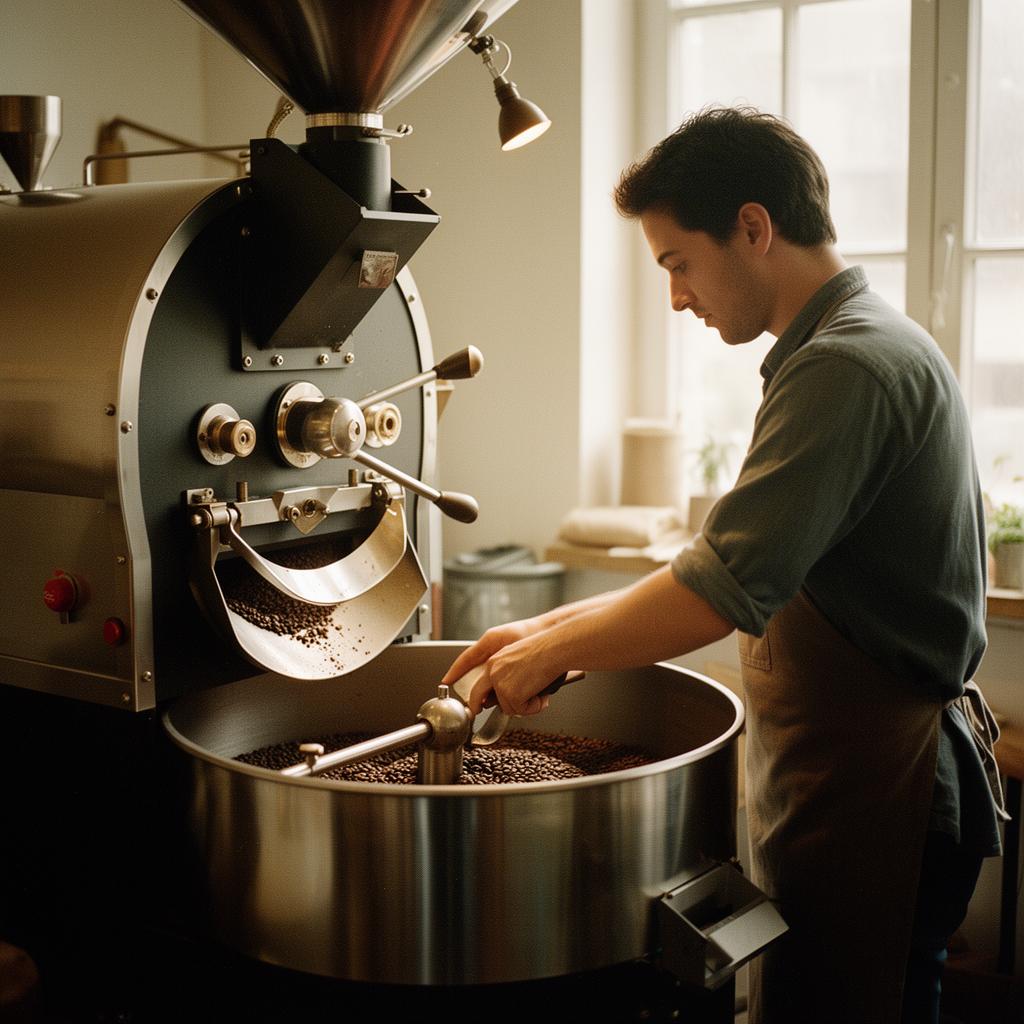
"Roasted to order" sounds like the bean comes out of the drum and straight into the box. It shouldn't. Coffee needs a rest, and the schedule we run is built around giving it one without letting it go stale on the way.
What's happening in the first 72 hours
Roasting builds up carbon dioxide inside the bean. A lot of it: a freshly roasted kilo holds several litres of CO2, and most of that leaves in the first few days. The industry word is degassing.
Brew a bean that's still gassing hard and the CO2 gets in the way of the water. On a pour over, the bloom erupts and the bed channels. On espresso, the shot runs fast and sour, then chokes when you grind finer to fix it. Nothing is wrong with the coffee. It's just not ready.
By day 3 or 4, enough gas has left that extraction settles down. For filter methods, days 4 to 14 are the sweet spot. For espresso, most baristas wait a bit longer, 7 to 14 days, because the gas affects a pressurised extraction more. After about day 30, aromatics have faded enough that you can taste the difference against a fresh bag. Which is why our shipping page says days 4 to 30.
The schedule
- Sunday 23:59 ET. Order cutoff for that week's roast. Anything later goes into the following Tuesday.
- Tuesday. Roast day. Every bag ships from that day's batch, so the roast date stamped on the bottom seam is the same for everyone that week.
- Tuesday to Thursday. The 72-hour rest. Bags are sealed on roast day; the one-way valve lets CO2 out and no oxygen in.
- Thursday. Ship day, USPS Ground Advantage or UPS depending on lane. 3 to 5 business days across the contiguous US.
- Day 5 to 9. The bag arrives. Filter drinkers can open it that day. Espresso drinkers get a better shot by leaving it a few more.
Two rules sit underneath that table. We aim for delivery within 7 days of the roast date, and we never ship anything older than 14. If a carrier delay pushes a bag past that, it doesn't go out.
Why not roast every day
A weekly roast lets us batch by coffee rather than by order, which means each lot gets its own profile rather than a compromise run of mixed beans. It also means we hold no roasted inventory. There's no shelf, so nothing sits on it.
The trade-off is that an order placed on Monday waits a week and a half before it lands. We think that's the right trade. Every alternative we looked at either shipped coffee too early to be at its best or kept a stock of roasted bags getting older by the day.
Once it's with you
Keep it in the bag, valve and all, at room temperature, out of the light. Squeeze the air out and reseal after each use. The freezer only helps if you're portioning single brews into airtight containers and pulling them out frozen; an opened bag going in and out of the freezer collects moisture and that does more harm than a fortnight on the counter.
And read the date. The roast date is on every bag for a reason. Our freshness piece goes deeper on what's being lost and how fast.
Frequently asked questions
- How long should coffee rest after roasting?
- At least 3 days for filter brewing and about a week for espresso. Kyros bags ship 48 hours after roasting and arrive from day 5, so they land inside that window.
- When does Kyros roast and ship?
- We roast every Tuesday and ship by Thursday. Orders placed by Sunday at 23:59 ET go into that week's roast.
- How long does roasted coffee stay fresh?
- It tastes best from day 4 to about day 30 after roasting, in a sealed bag with a one-way valve. We never ship a bag older than 14 days.
- Is the roast date printed on the bag?
- Yes, on the bottom seam, next to the lot number that links to the lab certificate.