Coffee freshness
Freshly roasted beans hold aromatics that stale coffee has already lost. Here's how long that lasts, and what storage actually does.
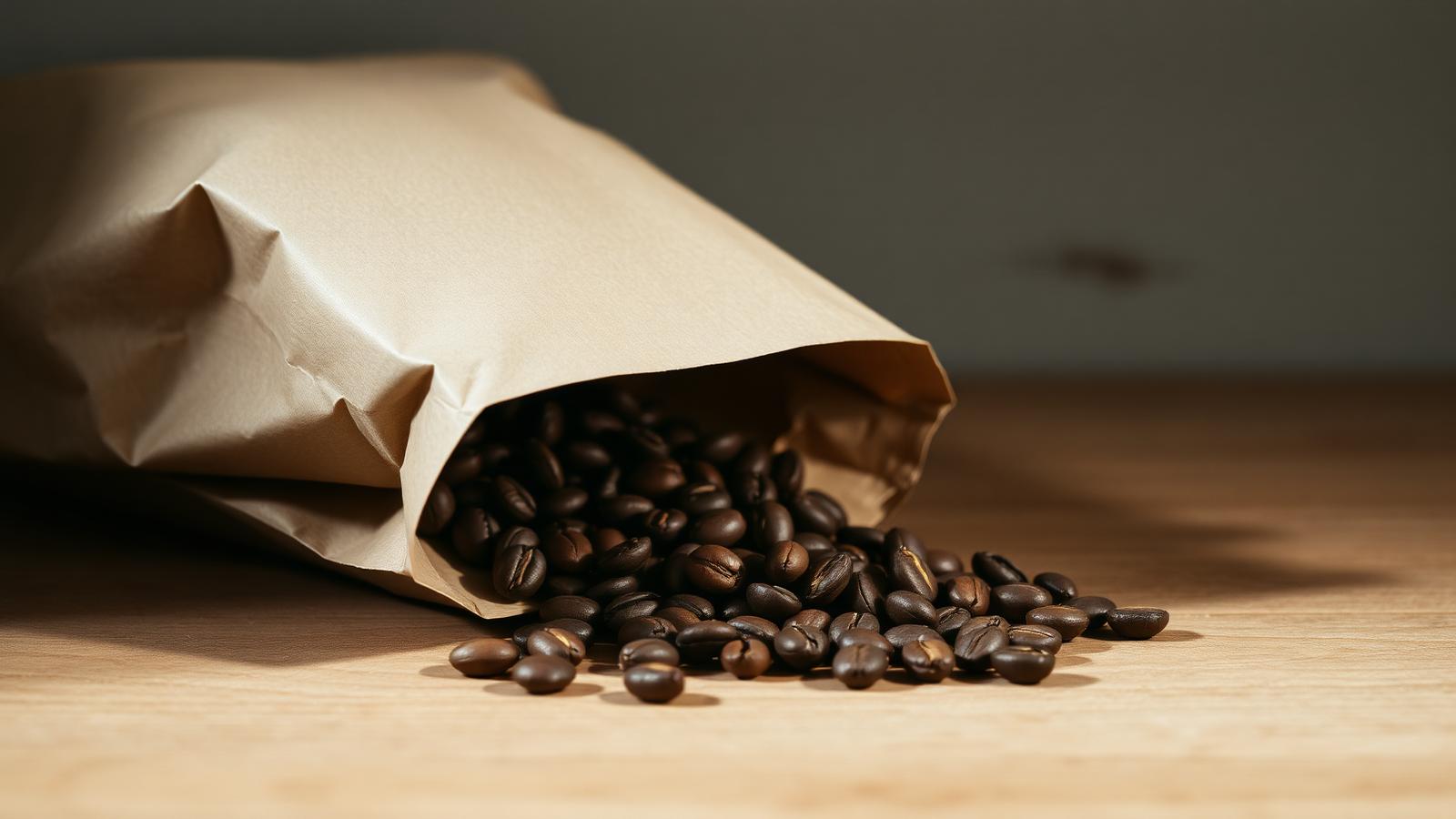
Green coffee keeps for a year or more. Roasted coffee starts losing what makes it interesting the moment it leaves the drum. That asymmetry is the whole freshness problem, and most of the coffee sold in supermarkets was roasted months before you opened it.
A roast turns dense green seeds into something porous and full of volatile aromatics, close to a thousand different compounds, and the porous part is the catch. Air gets in, aromatics get out. Coffee at day 60 still brews a dark drink with caffeine in it. Most of what made it taste like a farm in Tolima has already gone.
What “stale” means in the bean
Two things happen to roasted coffee over time, and they run at different speeds.
The fast one is loss. The aromatic compounds that give a coffee its citrus and its florals are volatile, which is another way of saying they evaporate. Every day the beans sit exposed to air, a little more of that leaves. Grinding speeds it up enormously, which is why pre-ground coffee loses around 60% of its aroma within 15 minutes.
The slow one is oxidation. Oxygen reacts with the oils in the bean and turns them rancid, in the same way it turns butter or nuts. That is where the flat, cardboard, faintly fishy taste of old coffee comes from. Heat, light and moisture all speed it up.
Dense beans hold on longer. A coffee grown between 1,500 and 2,000 meters has a tighter cell structure that keeps its volatiles locked in for weeks, which is one of the quieter reasons we pay for altitude. A soft, low-grown bean stales faster.
Why day 1 is too early
A roast needs a few days before it brews well. Roasting produces a lot of carbon dioxide, and the beans keep releasing it for days afterwards. Brew coffee that is a day old and the gas rushes out on contact with water, the bloom foams up, the water channels around the grounds instead of through them, and the cup tastes thin and sharp.
That release is called degassing, and it is why a roast needs a short rest. For filter brewing, 3 or 4 days is enough. Espresso, which is sensitive to gas because of the pressure, usually wants a week to 10 days. The rest starts the moment our Tuesday roast is bagged, carries on through Thursday dispatch, and by the time the bag reaches you the beans are settling into their best stretch. Roasted Tuesday, shipped Thursday walks through that schedule hour by hour.
The valve on the bag is there for this. Freshly roasted coffee sealed in an airtight bag with no valve would either burst it or have to be left open to air. A one-way valve lets the carbon dioxide out and keeps oxygen from getting in, so the coffee can rest sealed.
The window: day 4 to day 30
Put the two curves together, gas leaving and aroma leaving, and you get a window. From about day 4 the coffee has degassed enough to brew evenly. Up to about day 30 it still carries most of its aromatics. That is the stretch every Kyros bag is stamped for, and it is the reason the roast date is printed on the bag rather than a best-before date a year out.
Inside the window there is a gentle arc. Days 4 to 10 are the brightest, when a washed coffee shows the most citrus. Days 10 to 20 are the sweetest and roundest, and the point most people prefer. From day 20 the top notes start to soften and the cup gets simpler, still good, less distinct. After day 30 you are drinking the shape of the coffee rather than the detail.
We roast every Tuesday and ship by Thursday, and delivery inside the US typically takes 3 to 5 business days from the roast. That means your bag lands within a week, around day 5 to 7, right as it enters the window. We never ship anything older than 14 days, and orders placed after Sunday midnight ET go into the following Tuesday's roast rather than sitting on a shelf. The shipping page has the details.
How to store it at home
Storage can slow the clock. It cannot stop it, and it cannot rewind it, so the first rule is to buy in amounts you will finish inside the window. A 340 g bag is about 17 pour-overs, or 2 to 3 weeks of one cup a day. That is the size on purpose.
Once the bag is open:
- Leave the beans in the bag. It is foil-lined, it has the valve, and it seals. Squeeze the air out, roll the top down tight, and you have the best container you own. An opaque airtight canister is the other good option.
- Keep it at room temperature. A cupboard away from the stove and out of the sun. Heat and light both speed up oxidation.
- Grind right before you brew. This matters more than any container. Whole beans at day 20 beat pre-ground at day 5 by a wide margin.
- Keep it dry. Moisture is the fastest route to stale, and a fridge is a damp box that opens 20 times a day. Roasted beans also absorb smells, and a fridge has plenty.
The freezer is the one exception, with conditions. Freezing does slow oxidation and aroma loss substantially, which is why some competition baristas freeze their best lots. It only works if the coffee is sealed airtight in single-brew portions, so nothing thaws and refreezes and no condensation forms on the beans. Take out one dose, grind it frozen, and leave the rest sealed. Done that way it holds for months. Done any other way it is worse than the cupboard.
Reading a bag in the shop
Two checks tell you most of what you need. First, look for a roast date. If the bag only shows a best-before date, the roaster is asking you to trust a shelf-life claim, and coffee has lost most of its character long before that date arrives. Second, look for a valve. A bag without one was either packed long after roasting, when the gas was gone, or is letting air in.
Then do the maths. A roast date 3 weeks ago is fine. 3 months ago is a different product, whatever the label says. If you can smell the coffee through a sealed bag, that is aroma escaping, and a sign the seal is leaking.
Freshness is the part of quality that a roaster controls after the farm has done its work. Our single-origin piece covers the farm side, and the brewing guide covers the last step. Between the two, the roast date on the bag is where the rest of it lives.
Frequently asked questions
- How long does coffee stay fresh after roasting?
- Whole beans in a sealed valve bag taste best from day 4 to day 30 after the roast date. They are still drinkable well past that, but the aromatics that make a single origin taste like its farm fade noticeably after the first month.
- Should I use coffee straight after roasting?
- Give it a few days. Freshly roasted beans are still releasing carbon dioxide, which makes the brew foam and channel and tastes flat and sharp. Days 4 to 10 is the sweet spot for filter; espresso often wants a week or more.
- Is it better to buy whole bean or ground coffee?
- Whole bean, every time. Grinding multiplies the surface area exposed to air and pre-ground coffee loses most of its aroma within 15 minutes. A basic burr grinder is the single biggest upgrade to a home cup.
- How should I store coffee beans at home?
- At room temperature, in the original bag with the top rolled shut, or in an opaque airtight container. Away from the stove and out of direct light. The bag's one-way valve lets gas out and keeps air from getting in.
- Should I keep coffee in the fridge or freezer?
- Skip the fridge. It is humid and the beans pick up moisture and odours every time the door opens. The freezer only makes sense for coffee you won't reach for a month: seal single-brew portions airtight, and grind them straight from frozen without thawing.
- What does the roast date on the bag mean?
- The day the beans came out of the roaster. It is the only date that tells you anything about freshness. A 'best before' date a year out is a shelf-life claim, and coffee has lost most of its character long before it.