The C-market problem
Most of the world's coffee is priced off a futures contract traded in New York. That number moves on Brazilian weather and hedge-fund positioning, and it has nothing to do with the cup. Here's how it works, why it fails small growers, and what we do instead.
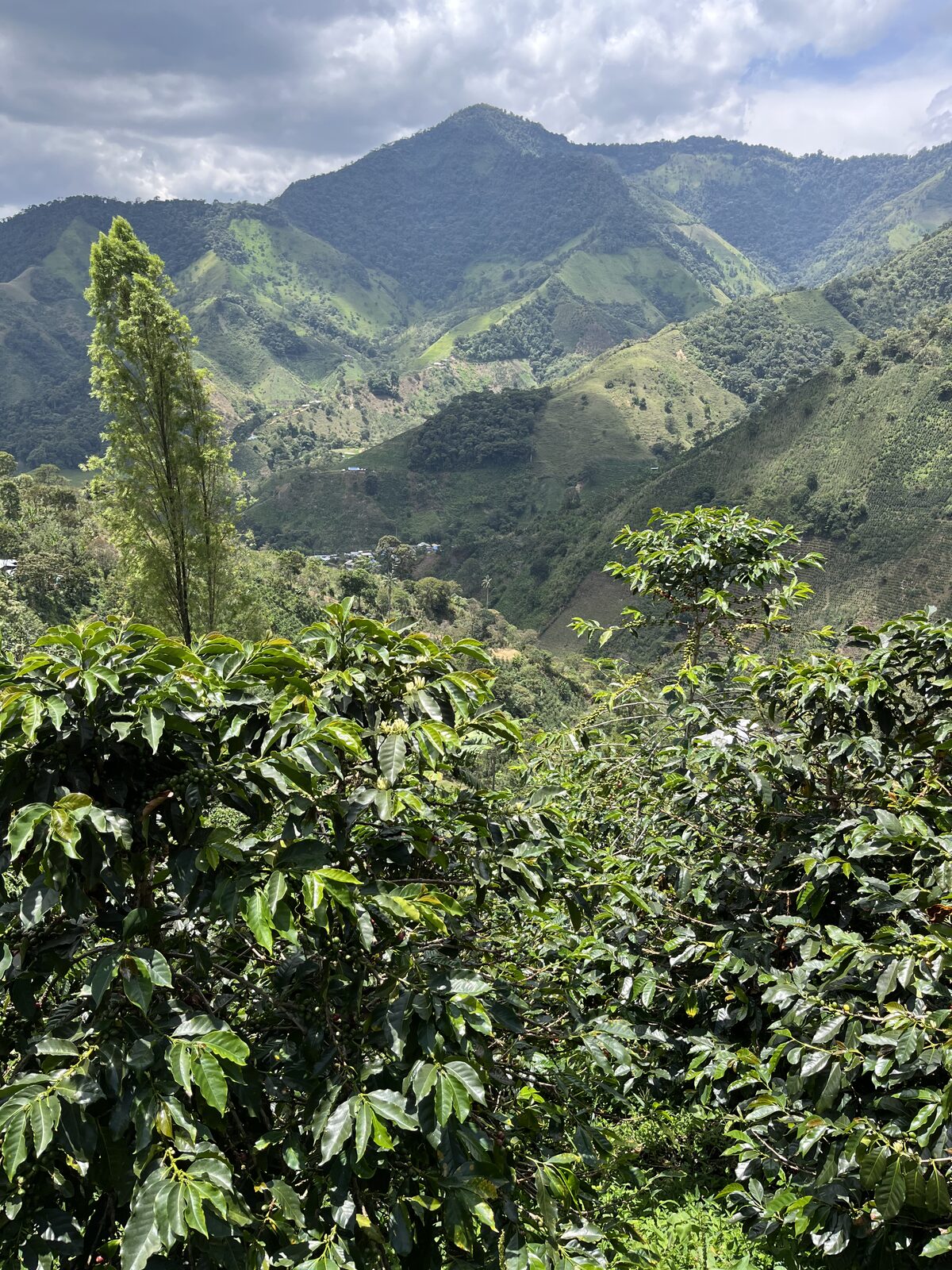
When a coffee brand says it pays "above market", the market it means is the C. It's worth knowing what that is, because the C is the single biggest reason a farmer growing an 86-point coffee can earn the same as one growing a 78.
What the C actually is
The Coffee "C" is a futures contract on ICE Futures US. One contract is 37,500 pounds of washed arabica, priced in US cents per pound, with delivery months in March, May, July, September and December. Coffee from around 20 origins can be delivered against it, with Colombia historically at a premium to the base grade and Brazil at a discount.
That contract price becomes the reference for nearly every physical arabica sale on earth. An exporter in Colombia quotes "C plus 30", meaning 30 cents a pound over whatever the front-month contract is doing that day. The Colombian coffee federation publishes a daily internal price in pesos per carga (125 kg of parchment) derived from the same number, and that's what a grower in Planadas sees on the noticeboard at the buying station.
So the farm-gate price in Tolima is, in effect, New York minus the costs of getting the coffee to New York.
What moves it
Frost in Minas Gerais. A dry season in Vietnam. The real against the dollar. Container rates. Whether commodity funds are net long or net short that week. The C has traded under $1 a pound (2019) and above $4 a pound (early 2025) within the same six years, and none of that swing had anything to do with what was in the cup.
That's the problem in one sentence. The price a grower gets paid is set by things the grower can't see, can't influence and can't hedge. A large estate can. A 3-hectare farm with one harvest a year can't.
Why it fails small farms
Volatility, first. A grower deciding whether to renovate a plot of Castillo is making a 5-year bet. Trees take 3 years to produce properly. If the C halves in that window, and it has, the renovation loses money regardless of how well the farm is run.
Second, the floor. When the C sat near $1 for most of 2019, it was below the cost of production for a lot of Colombian smallholders once you count labour, fertiliser and the family's own time. Nobody stops farming immediately at that price. They stop fertilising, then stop replanting, then the kids leave.
Third, and this is the one that bothers us most: quality isn't in the formula. A Q grader can score a lot at 86 and the C doesn't know or care. Specialty buyers pay differentials for that score, and those differentials are where the money for quality comes from. But a differential is still a bolt-on to a number that was arrived at without tasting anything.
What direct trade means at our scale
"Direct trade" has no legal definition, which is why we'd rather describe the mechanics than use the phrase.
Forest Coffee, our parent company, has bought green coffee from a cluster of farms around Planadas and Gaitania since 2018. Kyros lots come from that same cluster, at altitudes between 1,500 and 2,000 metres. We know the farms by name, we've walked them, and we cup every lot before we commit to it.
The price is set like this:
- Reference. The front-month Coffee "C" contract price on ICE on the day the lot is contracted, converted to Colombian pesos at that day's rate.
- Premium. We add 40% to that reference. This is a percentage, not a fixed cents-per-pound differential, so it tracks the market up as well as down.
- Who receives it. The premium is paid on the green price at the farm gate, to the grower whose name is on the lot. There's no cooperative margin or exporter mark-up between the premium and the farm, because Forest Coffee buys the parchment directly.
- Scope. The same formula applies to every Kyros lot, including the decaf. Decaffeination is a separate processing cost we pay on top; it doesn't come out of the grower's price.
Why a percentage and why 40. A fixed differential is what most specialty buyers use, and it works well when the C is low. When the C is high, a 30-cent differential on a $4 coffee is a rounding error. A percentage keeps the premium meaningful across the range. And 40 is roughly the gap between what a good Tolima lot fetches on the commodity channel and what it costs a grower to keep producing at that quality year after year, including the years the C doesn't cooperate.
Where the model is weak
We'd rather say this than have you work it out. A percentage above a bad number can still be a bad number. If the C fell back to $1, our price would be $1.40, which is better than the market and still tight for a smallholder. The honest answer is that in a year like that we'd sit down with the growers and set a floor, and the reason we can do that is that we buy from the same people every season instead of shopping the differential.
The other weakness is scale. Forest Coffee's volume is small enough that our premium changes the economics of a handful of farms, not a region. We're not claiming to fix Colombian coffee. We're claiming that the coffee in your bag was paid for at a price the grower can plan around, and that we can show you how that price was arrived at.
What this has to do with your cup
Everything, over time. Density, sweetness and clean acidity at 1,800 metres come from trees that were fertilised, pruned and picked ripe rather than stripped. That's labour, and labour gets paid out of the green price. Pay the C and you get, on average, C-quality decisions. Pay for the 86 and you get the 86 again next year.
That's the whole argument for the premium. Consistency is a purchasing decision before it's a roasting one. Read more on how altitude shapes the bean in Above 1,800m, and see the farms on the About page.
Frequently asked questions
- What is the C-market price for coffee?
- The Coffee "C" is the arabica futures contract traded on ICE Futures US, quoted in US cents per pound. It's the global reference price that most physical arabica sales, including farm-gate prices in Colombia, are derived from.
- What does Kyros mean by 40% above C-market?
- For each lot, we take the front-month C contract price on the day the lot is contracted and add 40%. The premium is paid on the green price at the farm gate, directly to the grower, and applies to every Kyros lot.
- Is 40% above C-market the same as Fair Trade?
- No. Fairtrade sets a fixed minimum price and a fixed social premium per pound. Ours is a percentage over the live market, paid directly to the named grower, without certification. Both approaches have merits; ours is the one we can audit lot by lot.
- Does the premium change the price I pay?
- It's already in it. Green coffee is a minority of the retail price of a bag once roasting, packaging, testing and shipping are counted, so the premium adds roughly a dollar or two per bag rather than doubling the price.