What we test for, and why
Every Kyros lot goes to an independent lab before it goes anywhere near a roaster. Here's what the lab looks for, why those five things and no others, and what a clean certificate actually tells you.
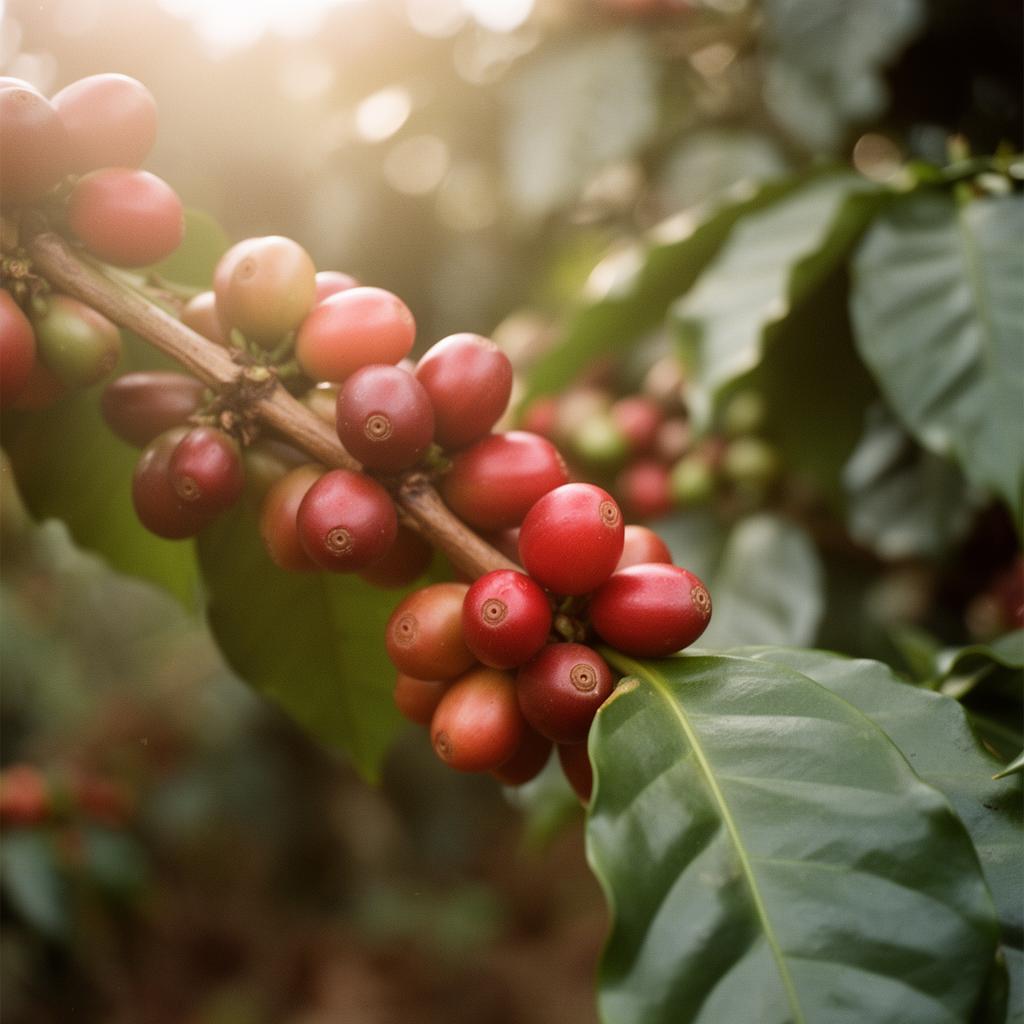
You'll see the phrase "tested for mold" on a lot of coffee bags, including, until recently, ours. It's a shortcut, and a slightly misleading one. Mold is an organism. Roasting at 200°C kills it. What roasting doesn't reliably remove is what certain molds leave behind while the coffee is drying or sitting in a warehouse: mycotoxins.
So we test for the residue, and we test the green coffee, before roasting, because that's where the number is highest and hardest to hide. If green passes, roasted passes. The reverse isn't guaranteed.
Five analytes, every lot. Two mycotoxins, three heavy metals. Here's each one.
Ochratoxin A
This is the one that matters most for coffee. Ochratoxin A (OTA) is produced by a few Aspergillus and Penicillium species that grow when coffee dries too slowly or gets stored damp. It's toxic to the kidneys in animal studies and the International Agency for Research on Cancer lists it as a possible human carcinogen (Group 2B).
The EU sets a legal maximum for OTA in roasted coffee of 3 micrograms per kilogram. The US has no coffee-specific limit. We report against the EU figure because it's the stricter of the two and because our lab's limit of quantification sits well below it.
Where it comes from in practice: rain during drying, parchment stacked before it hits 11% moisture, a warehouse with a leak. All of which are supply-chain problems, which is why buying from growers we know and checking the moisture reading at the wet mill is the first line of defence. The lab is the second.
Aflatoxins (B1, B2, G1, G2)
Aflatoxins come from Aspergillus flavus and A. parasiticus. They're the reason peanuts, maize and tree nuts get tested. Aflatoxin B1 is a Group 1 carcinogen, the strongest classification IARC has.
In coffee they're rare. The bean isn't a favourite host, and roasting degrades most of what's there. We test anyway, for two reasons. The mycotoxin panel runs all four aflatoxins on the same instrument as OTA, so the marginal cost is close to zero. And "rare" is a population statement, whereas the certificate is about your lot.
There's no EU limit specific to coffee. The US FDA's general action level for total aflatoxins in food is 20 parts per billion. Our lab reports each of the four individually plus the total.
Lead, cadmium, arsenic
Heavy metals don't come from mold. They come from soil, irrigation water, and occasionally from processing equipment. Volcanic soils, which give Tolima its density and acidity, can also carry cadmium. Latin American cacao has had a well-documented cadmium problem for exactly that reason. Coffee generally tests low, but "generally" is the same word as "rare" above.
The lab measures all three by ICP-MS (inductively coupled plasma mass spectrometry), which reads down to fractions of a part per billion. Results are reported against the lab's limits of quantification and against the reference values it uses, which for lead include California's Proposition 65 daily exposure figure. The certificate shows the number, the limit, and the method, side by side.
How the lab actually does it
A sample is pulled from the green lot at the exporter's warehouse in Colombia, sealed, and sent to an independent ISO 17025-accredited laboratory. Neither Forest Coffee nor the grower is in the room. The mycotoxins run by LC-MS/MS (liquid chromatography with tandem mass spectrometry), the metals by ICP-MS. Turnaround is usually 10 to 15 working days.
Each certificate states the lot number, the sample date, the analyte, the method, the limit of quantification, the result, and the reference limit. If any of those fields is missing, it's not a certificate we'd publish.
That lot number is printed on the bottom seam of every bag and shown in the Lab report section of each product page. Batch 001's certificate will be posted there before the batch ships on 1 December, and the founding list gets it by email the day it lands.
What a clean certificate doesn't prove
This is the part fear-marketing skips, so we won't.
- It's a sample of the lot. Sampling is done to a protocol, but a certificate is a statement about the lot as tested, not a guarantee about every individual bean.
- It says nothing about your kitchen. A grinder that hasn't been cleaned in a year, a kettle with limescale, a bag left open on a damp counter. None of that is on the certificate.
- It doesn't make coffee a health product. Coffee has its own well-studied benefits and limits, which we wrote about in the healthiest way to drink coffee. Testing removes a question. It doesn't add a benefit.
- "Not detected" means below the limit of quantification. That number is on the certificate. Zero isn't a thing any lab can measure.
Why we bother
Most specialty roasters don't test, and most of their coffee is fine. Cupping scores above 84 already correlate with careful drying, and careful drying is most of the mycotoxin story. So this is a belt-and-braces measure on a coffee that's already good.
We do it because the cost is small next to the green price, because the wellness crowd asks and deserves a real answer rather than a slogan, and because a brand whose name means "authority" should be able to show its working. The certificate is the working.
Frequently asked questions
- Is Kyros coffee mold-free?
- Roasting kills mold, so every roasted coffee is effectively mold-free. What we test for is what mold can leave behind: ochratoxin A and aflatoxins. Every lot is tested in green form and the result is published per lot.
- What mycotoxins are tested in Kyros coffee?
- Ochratoxin A and the four aflatoxins (B1, B2, G1, G2), measured by LC-MS/MS at an independent ISO 17025-accredited lab, before roasting.
- Which heavy metals do you test for?
- Lead, cadmium and arsenic, measured by ICP-MS. Results are reported against the lab's limits of quantification and the reference limits it uses.
- Where can I see the certificate for my bag?
- The lot number is printed on the bottom seam of the bag. The same lot's certificate is linked from the Lab report section of the product page. Batch 001's certificate is posted before the batch ships.
- Does testing mean the coffee is healthier?
- No. It means one specific set of contaminants has been checked and reported. The health effects of coffee itself are the same as for any other well-made coffee.