The healthiest way to drink coffee (and what quietly ruins it)
Coffee is linked to a lower risk of heart disease and dementia. Sugar and ultra-processed add-ins can quietly erase the benefit. Here is where the line sits.

Coffee is one of the most heavily studied things you can put in your body, and after decades of research the verdict has stopped wobbling. Drink it in sensible amounts and it lines up with a lower risk of heart disease, a sharper brain later in life, and a longer life overall.
The research also found something the headlines skip: those benefits are easy to cancel out.
A 2025 study from Tufts University followed more than 46,000 adults and found that the survival advantage linked to coffee mostly vanished once people loaded their cup with sugar and saturated fat. Same bean, same caffeine, different outcome, all because of what went in after the pour.
So the thing worth knowing is how you drink it. Below is what the science says about coffee and your heart, coffee and your brain, the exact point where add-ins start working against you, and how to drink it well day to day. None of it means giving up the ritual. Mostly it means leaving a few things out.
What coffee actually does for your heart
Coffee carries more than caffeine. It's loaded with bioactive compounds, chlorogenic acids chief among them, that act as antioxidants and seem to keep blood platelets from clumping too readily. That's a real biological reason for the heart findings, and it's the mechanism researchers at Harvard point to.
The population data backs it up. In the Tufts analysis, one to two cups a day was tied to lower death rates from all causes and from cardiovascular disease specifically. Work summarized by Harvard Health links moderate intake, roughly one to three cups, with a lower risk of atrial fibrillation, the irregular heartbeat that gets more common with age.
There's a ceiling, though, and it matters. The benefit peaks in that two-to-three-cup range and flattens after it. Push past three or four cups and the heart advantage weakens instead of building. More isn't the strategy.
Two honest caveats. Caffeine gives blood pressure a short-term bump, worth knowing if yours already runs high. And unfiltered coffee, French press or espresso-heavy drinks, lets through compounds called diterpenes that can push LDL (the “bad” cholesterol) up. Both of those are about how much you drink and how you brew it. The fix comes later.
How much is too much?
Two to three cups a day is the sweet spot the mortality data keeps landing on. In the Tufts study, that range mapped to roughly 16 to 17% lower all-cause mortality. Past it, the protection stops climbing and the downside starts: worse sleep, and the jittery afternoon that follows.
Your own tolerance is the real limit. If coffee wrecks your sleep or sets your heart racing, that's your number talking, whatever the averages say.
What coffee does for your brain
The brain evidence is where it gets interesting. A 43-year analysis of 131,821 people from the Nurses' Health Study and the Health Professionals Follow-Up Study linked moderate caffeinated coffee to an 18% lower risk of dementia, plus slower cognitive decline over time.
What makes that hard to wave away is the decaf comparison. In the same research, decaffeinated coffee showed no such link. When the caffeinated version helps and the decaf version doesn't, you're probably looking at a real active ingredient rather than healthy-user bias.
Keep it in perspective, though, and the researchers do. Senior author Daniel Wang said flatly that “the effect size is small” and that caffeine is “one piece of that puzzle.” Coffee sits alongside sleep and exercise, not in place of them. There's a supporting thread from other cohorts tying caffeine to a lower risk of Parkinson's, which fits the same picture: a mild, real, brain-protective effect.
Why caffeine, not just coffee
The leading explanation: caffeine blocks adenosine receptors in ways that look neuroprotective, while coffee's antioxidants support healthy blood flow to the brain. Modest effect, real biology. That's why it holds up when you strip the decaf out.
The catch: how sugar and ultra-processed add-ins erase the benefit
Now the numbers that rarely get spelled out.
In the Tufts data, black coffee and coffee with only small amounts of additives carried a 14% lower risk of death from any cause. Coffee served high in sugar and saturated fat carried no measurable benefit at all. The benefit vanished completely.
The thresholds are more specific than you'd guess, and they're the most useful thing in this whole piece:
- Added sugar: stay under about 2.5 grams per 8-ounce cup, roughly half a teaspoon. A flavored latte or a caramel drink clears that many times over, often before your first sip.
- Saturated fat: stay under about 1 gram per 8-ounce cup, roughly a tablespoon of half-and-half, or five tablespoons of 2% milk.
Put those numbers next to a café menu and the line gets obvious. A caramel macchiato is a dessert that happens to contain coffee, and it blows past both thresholds before you've had a sip. Flavored syrups, sweetened creamers and whipped toppings sit between you and the benefit, and they're exactly what the study flagged.
Here's the nuance, because you don't have to drink it bitter. In work cited by Harvard, a single teaspoon of sugar didn't wipe out coffee's benefits. The issue is quantity, plus the ultra-processed extras. A splash of milk and a small sugar keeps you well inside the line.
A quick audit of your order
Roughly where your usual cup lands:
- Black coffee: you're golden.
- Coffee with a splash of milk: still golden.
- Coffee with one sugar: fine.
- Big pour of flavored creamer: careful.
- Syrup latte, caramel or vanilla or hazelnut: dessert zone.
- Blended or whipped “coffee” drink: dessert zone.
If your daily cup sits in the top half, the science is working for you. If it's in the bottom half, you're drinking something closer to a milkshake, and paying for coffee benefits you're not actually getting.
The healthiest way to drink coffee
Pulled together, it comes down to five habits:
- Keep additives under the thresholds. Black or close to it is where the strongest data sits. A splash of milk and a small sugar is still fine.
- Aim for two to three cups a day. That's where the heart and longevity benefits peak. More doesn't add protection.
- Use a filter if cholesterol is a concern. Paper filters trap most of the diterpenes that raise LDL, which makes paper-filtered brewing the gentler pick.
- Sweeten on purpose, not on autopilot. A little, by choice, beats a heavy hand out of habit. The syrups and sweetened creamers are where the sugar piles up.
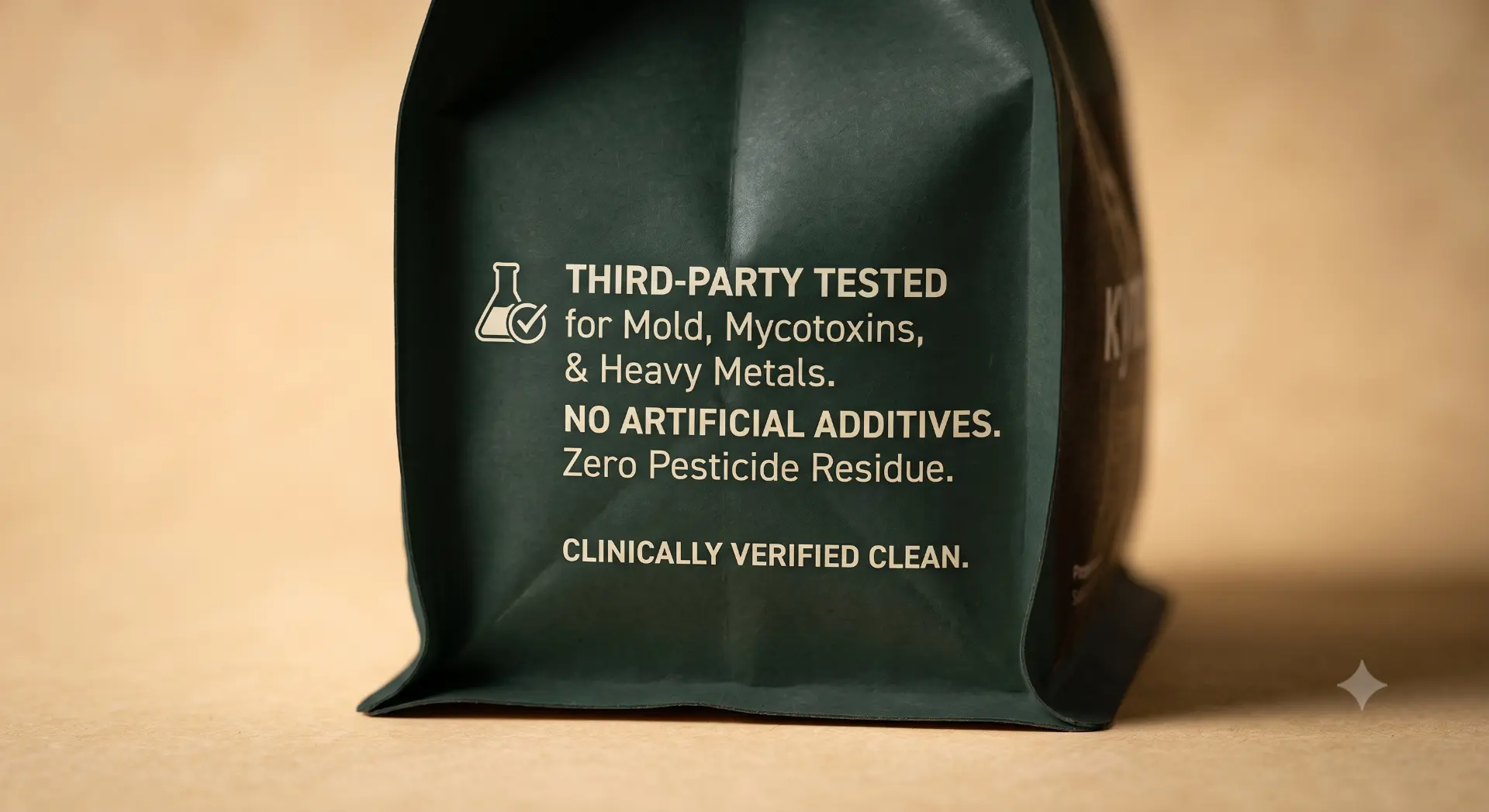
- Start with better beans. Fresh, well-sourced coffee tastes like something on its own, which is the quiet trick to needing less sugar. Origin and freshness also shape the chlorogenic-acid content that makes coffee worth drinking in the first place.
That last point is where quality stops being a snob's concern and becomes a health one. When the coffee's good, you reach for the sugar less, and the whole equation tips back your way.
Frequently asked questions
What is the healthiest way to drink coffee?
Black or close to it, two to three cups a day, with additives under about half a teaspoon of sugar and a tablespoon of cream per cup. Paper-filtered brewing is the gentlest option if you watch your cholesterol.
Does adding sugar to coffee cancel out the health benefits?
A small amount doesn't. A single teaspoon leaves the benefits intact. Heavy sugar and ultra-processed syrups are the problem, and the line sits around 2.5 grams of added sugar per cup.
Is black coffee better for you than coffee with milk?
Both are fine as long as the cream stays under about a gram of saturated fat per cup. Black carries the strongest mortality data, but a splash of milk won't undo it.
How many cups of coffee a day is healthy?
For most adults, two to three. The benefits plateau after that, and extra cups mostly cost you sleep.
Does decaf have the same benefits?
For the brain, mostly no. The dementia link showed up with caffeinated coffee and not decaf, which points to caffeine doing the work. Heart benefits look more mixed.
Is it OK to drink coffee every day?
For most healthy adults, yes, within that two-to-three-cup range. Daily coffee is one of the best-studied habits going.
The bottom line
Coffee earns its reputation: lower risk to your heart, a more resilient brain, a longer life, as long as you don't turn it into dessert. Keep the cup close to how the research studied it, which means real coffee, in sensible amounts, without the sugar-and-syrup layer that quietly erases the payoff.
At Kyros, that's why we care so much about sourcing and roast. A good single-origin coffee is good enough to drink with a splash of milk and nothing else, which happens to be how the science says to drink it. Have a look at our current single-origin range, and if you want more from every cup, our guide to filtered brewing methods covers the how.
This article is for general information and isn't a substitute for medical advice. If you have a heart condition, high blood pressure, or concerns about caffeine, talk to your doctor about what's right for you.
Sources: Tufts University / The Journal of Nutrition (2025); Mass General Brigham & Harvard T.H. Chan School of Public Health 43-year dementia analysis; Harvard Health; Harvard Gazette.