Filtered brewing methods
Paper filters trap most of the diterpenes that push LDL cholesterol up. The method you choose changes what ends up in the cup.
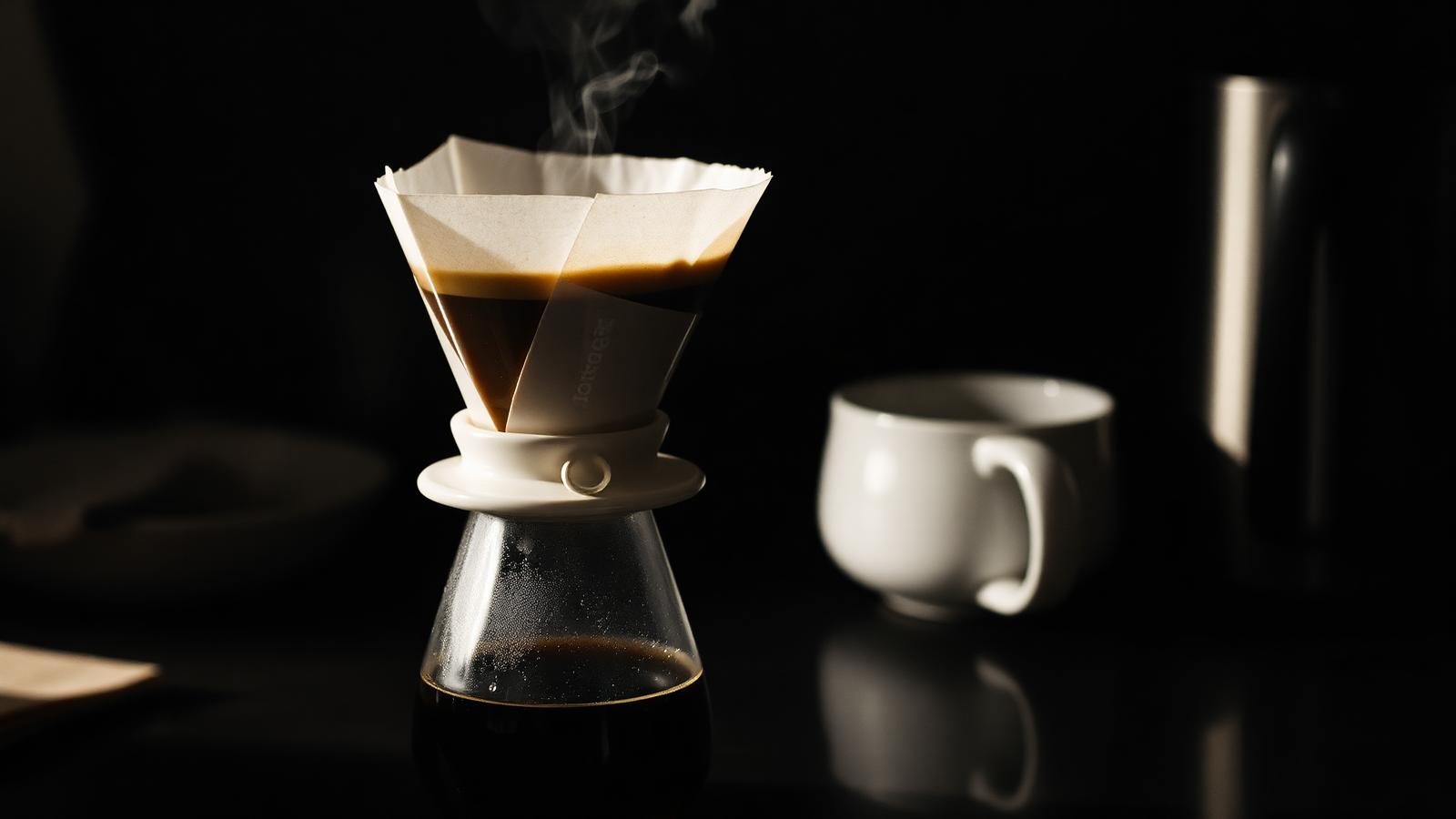
Most of the argument about how to brew coffee is about taste. There is a second argument that gets far less airtime, and it is about a thin sheet of paper.
Coffee beans carry oils, and two compounds in those oils, cafestol and kahweol, raise LDL cholesterol when you drink enough of them. A paper filter holds the oils back. A metal mesh or a press lets them through. Same beans, same roast, different cup, and over years of daily coffee the difference shows up in blood work.
What diterpenes are and why they matter
Cafestol and kahweol are diterpenes, fat-soluble molecules that sit in the oil fraction of the roasted bean. Cafestol is the most potent cholesterol-raising compound known in the human diet, gram for gram. It works by interfering with the liver's ability to clear LDL from the blood.
The evidence goes back to Scandinavia in the 1980s, where people drank a lot of boiled coffee and had a lot of high cholesterol. Dutch researchers Rob Urgert and Martijn Katan then spent a decade pinning down the mechanism. Their finding, repeated many times since: unfiltered coffee raises LDL, and the effect is dose-dependent. In their trials a daily habit of several cups of unfiltered coffee pushed LDL up by a measurable margin within weeks, and it came back down once the subjects switched to paper-filtered.
The mirror image showed up in a 2020 Norwegian study in the European Journal of Preventive Cardiology that followed about 508,000 adults for two decades. Filtered coffee drinkers had a lower risk of dying from heart disease than people who drank none at all, and a lower risk than unfiltered drinkers. The filter was the variable.
A French press cup here and there is fine. The point is that coffee is a daily habit for most of us, 2 or 3 cups, and over that many cups the brew method is a lever you control.
How the common methods compare
The rule is simple: paper traps oil, everything else lets some through. Here is where each method lands, from cleanest to heaviest.
Paper pour-over: V60, Kalita, Chemex
The cleanest cup you can make. Water passes through the grounds once, by gravity, and every drop goes through paper. Cafestol per cup is a fraction of a milligram. Chemex filters are thicker than V60 papers and hold back even more oil, which is why a Chemex cup tastes so tea-like.
This is also the method that shows a single origin most clearly. With the oils out of the way, the acidity and sweetness are what you taste. It is how we taste our washed Clean & Bright, and it is the recipe at the top of our brewing guide: 20 g of coffee, 320 g of water at 92 to 96°C, a 45-second bloom, and a total brew of 3 to 3½ minutes.
Drip machine with paper filters
Same principle as a pour-over, automated. A decent machine with a paper cone or basket is as good for your cholesterol as any hand-pour. The catch is water temperature. Cheaper machines run too cool and under-extract, so the coffee tastes thin and people compensate with sugar, which is a worse trade than the oils were. Look for a machine that hits at least 92°C at the shower head.
AeroPress
With the standard paper disc, the AeroPress counts as filtered coffee, and a good one. The pressure from the plunger pushes the water through a paper layer, so the oils stay behind with the grounds. Swap in a metal disc and you lose that. Our recipe: 15 g of coffee to 210 g of water at 92°C, steep 1 minute, press over 30 seconds, then dilute to taste.
Cold brew
Depends entirely on how you strain it. Cold water extracts fewer oils in the first place, and if you run the concentrate through paper you end up with very little cafestol. Steep it in a mesh basket or a cloth bag and decant, and you are somewhere between paper and French press. When in doubt, paper-filter the concentrate.
Metal-filter pour-over
Reusable steel cones are sold as the eco-friendly version of a V60. For the cup, they behave more like a French press. The mesh stops grounds and lets oils and fine particles through, so the coffee is heavier and the cafestol count is higher. If waste is the worry, unbleached paper filters compost with the grounds.
French press
Full immersion, metal mesh, oils and all. It is the method that gives our natural-process Rich & Complex its heaviest, most syrupy body, and it is the method the cholesterol studies keep flagging. A cup carries several milligrams of cafestol. Enjoyed on weekends, no problem. As the daily driver for someone with high LDL, it is the first thing a cardiologist will ask about.
Espresso
Espresso goes through a metal basket under pressure, so the oils come through. That crema is oil. The saving grace is the size: a single shot is about 30 ml, so it carries less total cafestol than a mug of French press even though the concentration is higher. One or two shots a day is a moderate dose. A daily habit of three doubles topped up with milk drifts toward the unfiltered end.
Boiled, Turkish, Scandinavian kettle coffee
The far end of the scale. Grounds boiled directly in water and poured off, with nothing between the pot and the cup. This is the coffee that started the research, and it carries the most cafestol of any method. Treat it as an occasional pleasure.
Getting body out of a paper filter
The usual complaint about paper-filtered coffee is that it tastes weak next to a press. That is almost always a recipe problem, and it fixes in three moves.
- Use enough coffee. A 1:16 ratio, so 20 g of coffee for 320 g of water, is the floor for a pour-over. Most thin cups are under-dosed.
- Grind fresh and grind medium-fine. Pre-ground coffee loses most of its aroma within a quarter of an hour. A burr grinder set a touch finer than table salt gives the filter enough contact time to pull the sweetness out.
- Keep the water hot. 92 to 96°C for filter. Water off the boil for 30 seconds is about right. Cooler water under-extracts and leaves the cup sour and hollow, which people then read as “weak.”
Rinse the paper first, with hot water, and pour it away. That takes the papery taste out and pre-heats the dripper. Then follow the recipe for a week before you start adjusting. Consistency teaches you more than tweaking.
Start with a coffee that has something to show. A washed single origin from altitude, roasted light-to-medium and brewed inside its freshness window, has the acidity and sweetness that paper lets through. Our piece on single-origin coffee explains what to look for, and the one on freshness covers the window.
Where this fits with the rest of the research
The filter is one of two levers. The other is what you add after the pour. Sugar, syrups and heavy cream can erase coffee's heart and longevity benefits by themselves, and we covered the thresholds in the healthiest way to drink coffee. Put the two together and the picture is short: 2 to 3 cups a day, paper-filtered, close to black.
That happens to be the way a good single origin tastes best anyway. The filter that protects your LDL is the same one that shows you the farm.
Frequently asked questions
- What is the healthiest way to brew coffee?
- Through a paper filter. Pour-over, a paper-filter drip machine and the AeroPress with its standard paper disc all trap the diterpenes that raise LDL cholesterol. Metal filters, French press, espresso and boiled coffee let more of them through.
- Does a paper filter remove cholesterol-raising compounds from coffee?
- Most of them. Cafestol and kahweol travel in coffee's oils, and paper holds oil back. A paper-filtered cup carries a fraction of a milligram of cafestol, against several milligrams in a French press cup and more still in boiled coffee.
- Is French press coffee bad for cholesterol?
- A daily habit of several cups can nudge LDL up, because the metal mesh lets the oils through. An occasional French press is fine. If your cholesterol already runs high, make paper the default and keep the press for weekends.
- Is espresso filtered coffee?
- Only by a metal basket, so no. A single shot carries less cafestol than a mug of French press because it is small, but the concentration per millilitre is higher. Two or three shots a day add up to a moderate dose.
- Do metal mesh filters work the same as paper?
- No. Mesh stops grounds and lets oils and fine particles through, which is why a metal-filter pour-over tastes heavier. For the cholesterol effect, paper is the filter that does the work.
- Does a paper filter change the taste?
- Yes, and mostly for the better with a clean single origin. Paper gives a lighter body and clearer acidity and sweetness. Rinse the filter with hot water first so you don't taste the paper itself.
This article is for general information and isn't a substitute for medical advice. If you have high cholesterol or a heart condition, talk to your doctor about how much coffee, and which kind, is right for you.
Sources: Urgert & Katan, Annual Review of Nutrition (1997); Tverdal et al., European Journal of Preventive Cardiology (2020); Harvard Health.